On the surface, historical newspaper accounts of marriages with significant age gaps can read like sensationalized scandals. However, when genealogical records and historical context are combined, a deeper, more complex reality often emerges regarding family dynamics and economic survival.
An article published in The Boston Daily Globe on November 29, 1902, detailed a wedding in Franklin, New Hampshire:
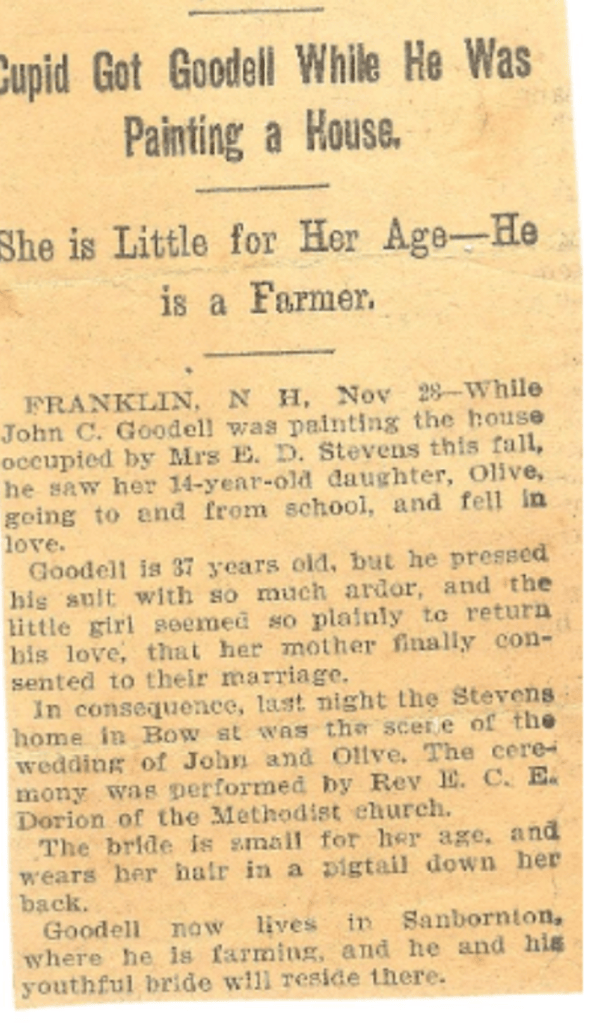
An analysis of this text raises questions regarding the true motives behind the family dynamics, the factors influencing maternal consent, and the actual autonomy of the young individual involved. Public records from the era offer a different perspective on the circumstances surrounding the marriage.
The Reality of the Historical Timeline
While modern researchers might wonder if the bride’s age was misreported or exaggerated by the press, genealogical data verifies the timeline. Census records from 1900 list the daughter as a 12-year-old residing in Franklin, confirming her age as 14 at the time of the wedding in late 1902.
Economic Survival and Maternal Consent
The newspaper account attributed the mother’s consent to the groom’s persistent courtship. However, vital statistics and census data from the period indicate that broader socio-economic pressures likely dictated the family’s choices. The historical context of the family’s household reveals significant vulnerability:
- Family History: Vital records reveal that the mother, Emma Stevens, endured years of profound personal and financial hardship long before her daughter’s wedding. She survived a divorce granted on the grounds of “extreme cruelty,” entered a short-lived second marriage, and suffered the tragic loss of her seven-year-old son to tonsillitis in 1882. Following another divorce and a surprising remarriage to her first husband, Emma gave birth to her daughter, Julia, in 1886. Her unstable home life was upended yet again when her husband passed away, leaving Emma a widow with a four-year-old child to raise completely alone.
- Economic Instability: By 1902, Emma was a 62-year-old widow renting a home in Franklin with no recorded employment.
In the early 20th century, single, aging women faced severe economic limitations due to the absence of a public social safety net, pensions, or widespread employment opportunities. Securing a marriage to an established farmer and property painter like John Goodell provided a mechanism to ensure long-term shelter and sustenance for the daughter in the event of the mother’s illness or death.
The Value of Micro-History
This case serves as an example of how micro-history can challenge superficial historical assumptions. A narrative framed by turn-of-the-century journalism as a lighthearted romance often concealed the harsh economic realities faced by impoverished, single-parent households. Examining the public records behind such headlines provides a clearer understanding of the strategic choices made by vulnerable families to ensure survival at the turn of the century.
Julia and John went on to live long lives, having 17 children together in 26 years.


Leave a Reply