Tracing generations from the villages of France to New France, Acadia, and the hills of Vermont.
Every family tree holds stories that reach far beyond names and dates. Sometimes, those stories cross oceans, survive political upheaval, and lead us to unexpected places. A baptismal record in France, a colonial settlement in Quebec, or a census entry in Vermont can reveal connections that span centuries.
Recently, I curated a family history journey for a client that uncovered a remarkable lineage stretching from 17th-century France to early 20th-century Vermont.
At the heart of this story are the Saint Pierre sisters, Jeanne and Catherine, the Gaudet family of Acadia, and Joseph Trottier, whose journey eventually brought him to New Hampshire and Vermont.
This is a story of migration, resilience, and the extraordinary connections that make family history so fascinating.
The Beginning: Jeanne and Catherine Saint Pierre
Saint-Jean-d’Angély, France — 1627
Our journey begins in the historic French region of Saintonge, near Saint-Jean-d’Angély in what is now Charente-Maritime, France.
In the 17th century, the French colony of New France was growing. Among the women who traveled across the Atlantic were the Filles à Marier—women who came to the colony to marry and establish families.
Two sisters, Jeanne Saint Pierre and Catherine Saint Pierre, left their French homeland and arrived together in the Quebec colony as Filles à Marier.
Their decision to leave France would shape the future of generations of descendants.
Leaving home in the 1600s was no small undertaking. The Atlantic crossing was long and difficult, and life in New France was very different from life in the French villages they knew.
Yet these women became part of the early French-Canadian population whose descendants would eventually spread throughout Quebec, Acadia, New England, and beyond.
Their story is a reminder that every family’s history begins with people who made choices that changed the future.
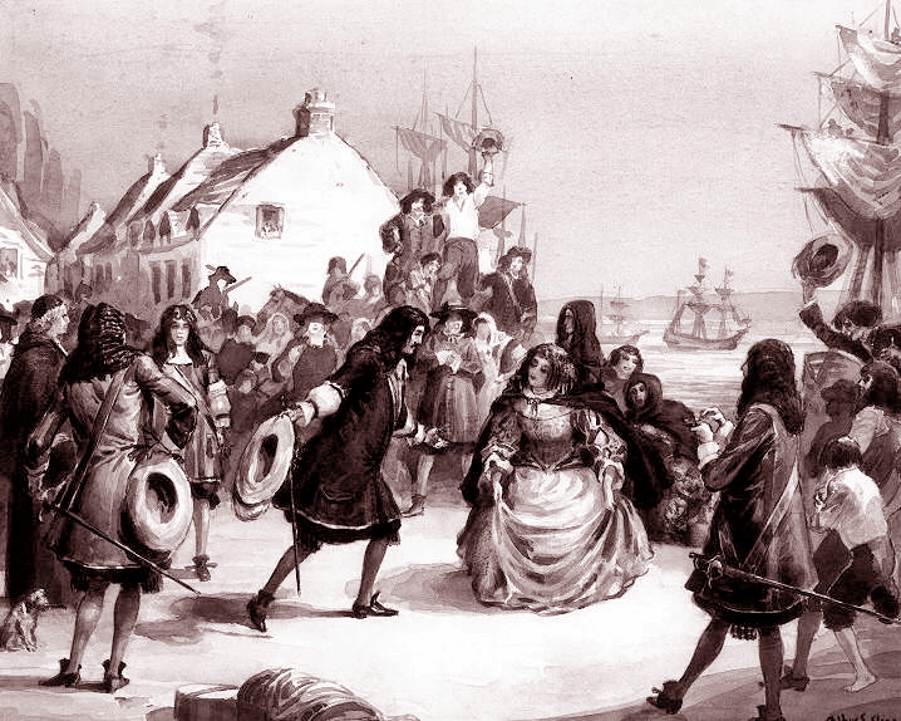
Denis Gaudet: A Boy’s Journey to New France
One of the most compelling stories uncovered in this family history is that of Denis Gaudet.
Denis was just 11 years old when he left his original home in Martaizé, France, with his family.
According to the family research, his father was recruited by Charles de Menou d’Aulnay, governor of Acadia, to move the family and help colonize New France.
For a young boy, this would have been a life-changing experience. He was leaving behind the familiar world of France and beginning a new life across the Atlantic.
What was the voyage like for Denis? Where did his family settle? What did he experience as he grew up in the colony?
These are the questions that make genealogy more than a collection of names. They help us see our ancestors as real people who lived through extraordinary times.
Charles Gaudet and the Acadian Story
As the family history continued, another important ancestor emerged: Charles Gaudet, who was banished from Acadia to Quebec.
The history of the Acadians is one of the most significant chapters in the story of French North America.
Acadians were French settlers and their descendants who established communities in what is now Atlantic Canada. Over time, they developed a distinct culture shaped by their French roots, their life in Acadia, and the challenges they faced.
During the upheaval of the 18th century, Acadian families were displaced from their homes. Some were sent to Quebec, while others eventually made their way to Louisiana.
The Acadians who settled in Louisiana became the ancestors of the modern Cajun people, whose culture continues to reflect their French and Acadian heritage.
For this family, Charles Gaudet’s banishment to Quebec represents one branch of a much larger Acadian story.
While some Acadians were sent south to Louisiana, Charles’s journey led north to Quebec.
The same historical events that scattered Acadian families across North America helped create communities whose descendants would preserve their French language, traditions, and identity for generations.
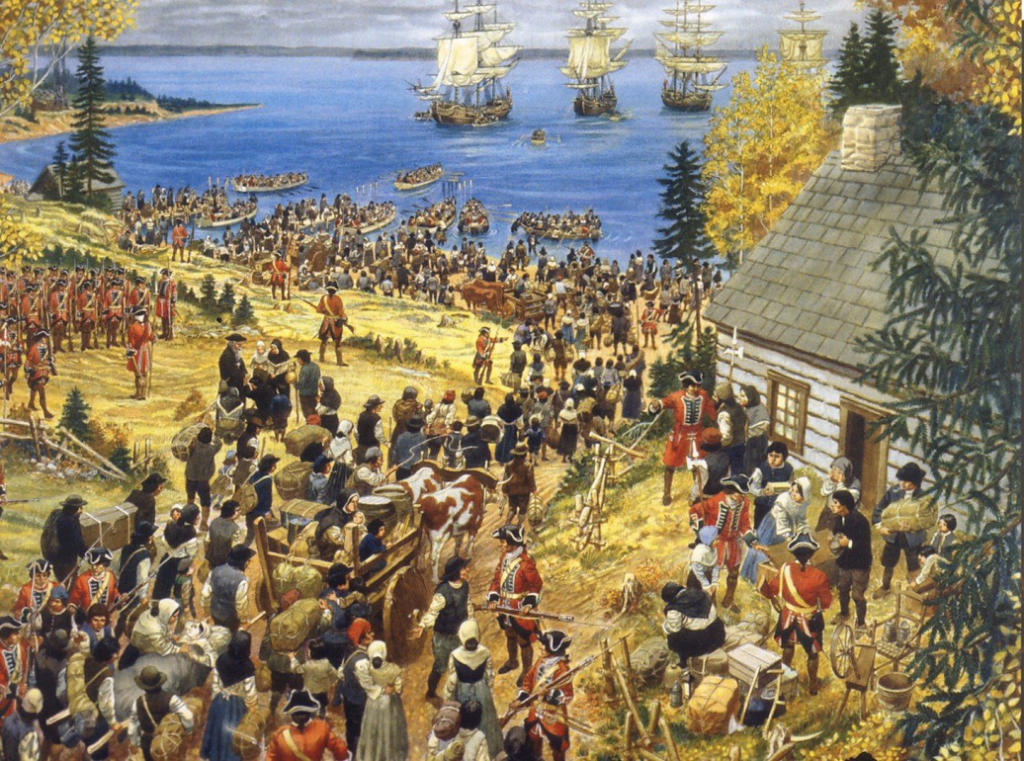
From Quebec to New England: Joseph Trottier
The family history eventually brings us to Joseph Trottier, whose life connected Quebec with New England.
Joseph Trottier was born in Saint-Gentilly, Quebec, and later made his way to the United States by way of the Boston & Maine Railroad.
His journey reflects the movement of many French-Canadian immigrants who traveled south in search of work and new opportunities.
Arriving in the United States by railroad, Joseph entered a new chapter of his life.
He worked in a paper mill, an industry that played an important role in the communities of New England.
But his story did not end there.
From the Paper Mill to Dartmouth College
Joseph Trottier later became caretaker of the college grounds at Dartmouth College in Hanover, New Hampshire.
This is a wonderful example of how a genealogy record can reveal more than an occupation. It can show the different stages of a person’s life and the communities in which they lived.
Joseph’s journey took him from Saint-Gentilly, Quebec, to the industrial world of New England, and eventually to the grounds of one of the region’s historic colleges.
His work as a caretaker connected him to Dartmouth’s campus and to the everyday life of the college community.
For descendants, these details help bring Joseph to life—not simply as a name in a family tree, but as a man who worked, traveled, and built a life in a new country.
South Royalton, Vermont: The Final Chapter
The family history eventually leads to South Royalton, Vermont, where Joseph Trottier was buried.
His story, from Quebec to the United States, reflects the broader journey of families who crossed borders in search of opportunity and a better future.
By the early 20th century, the family’s story had reached the hills of Vermont, connecting the French origins of the Saint Pierre and Gaudet families with the later generations of Trottier’s in New England.
From France to New France, from Acadia to Quebec, and from Quebec to Vermont, the family’s journey spans centuries of history.
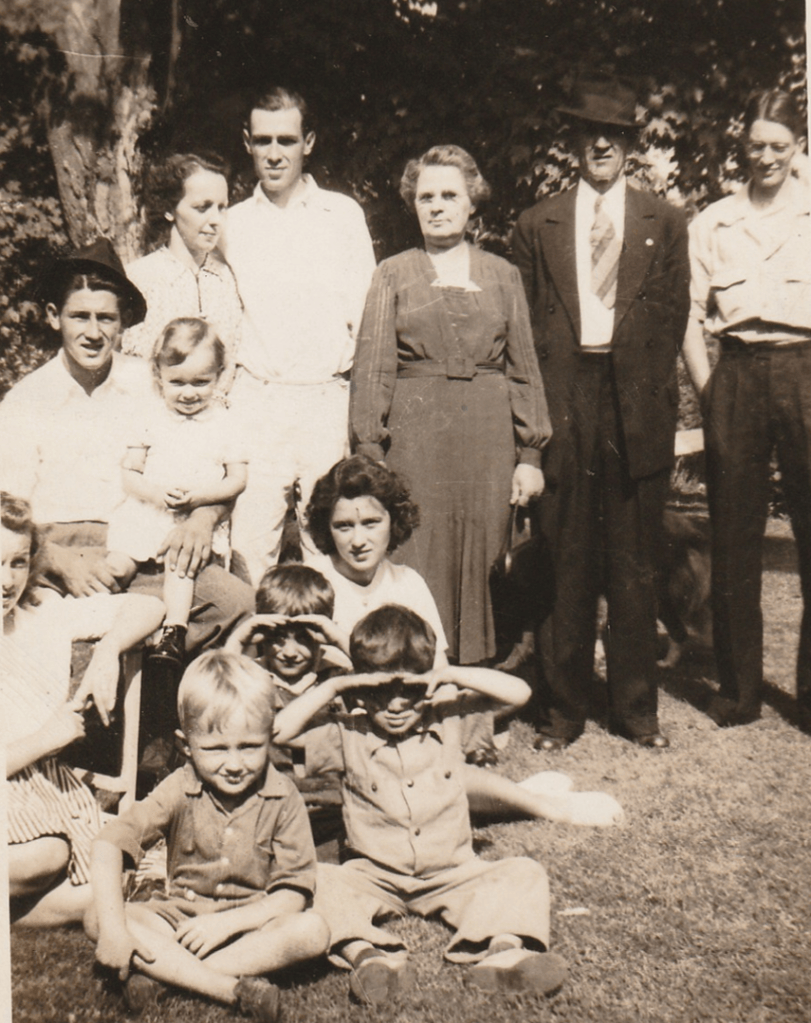
The Stories Hidden in the Records
What makes this family history so fascinating is the way each discovery adds another piece to the puzzle.
A surname reveals a family connection.
A village identifies an ancestral home.
A colonial record shows a migration across the Atlantic.
A historical event explains why an ancestor was forced to leave one place and settle in another.
A railroad journey reveals the path taken by an immigrant seeking work.
And a burial location brings us to the final resting place of someone whose life helped shape the generations that followed.
These are the stories that make genealogy meaningful.
A Legacy That Crosses Generations
The Saint Pierre, Gaudet, and Trottier family histories remind us that our ancestors were part of a much larger story.
They lived through the settlement of New France, the upheavals of Acadia, the development of French-Canadian communities, and the growth of New England.
Their lives were shaped by migration, work, family, and the changing world around them.
Today, their descendants have the opportunity to uncover these stories and preserve them for future generations.
Because family history is not just about where we came from.
It is about the people who came before us—and the journeys that made our lives possible.
 Rooted Heritage Research clancastle185@gmail.com
Leave a comment