Every family history has a story of beginnings. Sometimes that story starts in a familiar place, but sometimes it begins thousands of miles away, in a village that existed centuries before our ancestors ever imagined leaving it. For Robert Goodale, that beginning was in Dennington, Suffolk, England, where he was born on August 16, 1604, to Joan and Robert Goodale. His birthplace was a historic rural village in eastern England, surrounded by the agricultural landscape of Suffolk.
Robert was born during a period of significant change in English history. King James I, had come to the throne only a few years earlier, beginning the Stuart era. England was experiencing religious and political tensions that would continue to shape the country throughout Robert’s early life. The growing Puritan movement was also influencing communities across England, as some people sought changes in religious practice and church life. It was into this changing world that Robert Goodale grew up.
A New Chapter
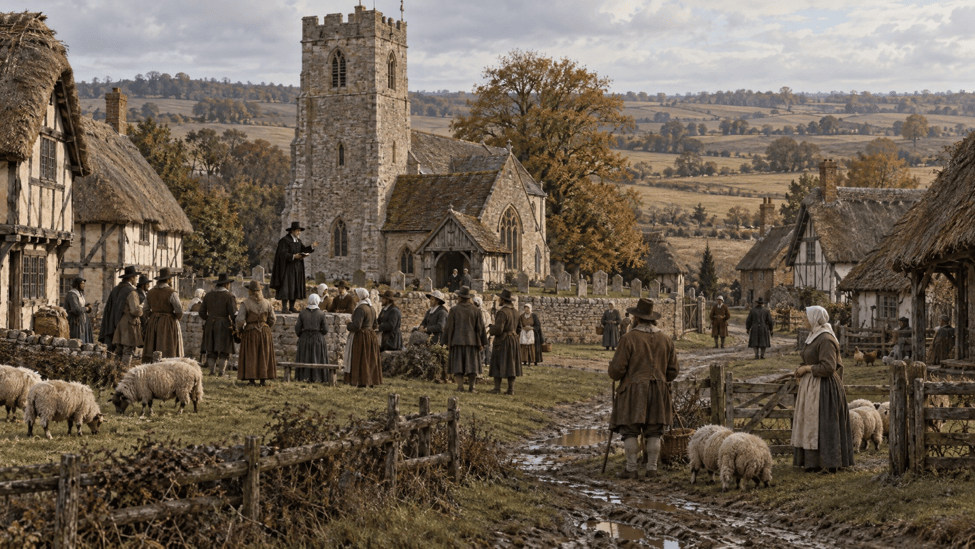
At some point in his adult life, Robert married Katherine Killiam. Together, they began a family and eventually made the momentous decision to leave England behind. In 1634, Robert and Katherine, along with their three children, boarded the sailing ship Elizabeth bound for New England. For the Goodale family, this was far more than a voyage across the Atlantic. It meant leaving behind the village, family connections, and familiar countryside of Suffolk and beginning again in a distant and developing colony.
The Atlantic crossing was a difficult journey. Seventeenth-century ships were small by modern standards, and passengers faced cramped quarters, unpredictable weather, limited provisions, and weeks at sea. For a family traveling with three young children, the journey must have been a significant undertaking. After crossing the Atlantic, the Goodale family arrived in Boston, Massachusetts.

From England to Salem Boston was already becoming an important center of the growing New England colonies. But the Goodale’s did not remain there. They eventually made their home in Salem, Massachusetts, where Robert would spend the remainder of his life. Salem in the 1630s was still a young settlement. Much of the surrounding land remained forested, and life was very different from the English village Robert had known. Families worked to establish homes, farms, and communities in a landscape that was both promising and challenging. Several historical sources describe Robert as a successful landowner who acquired large tracts of property in Salem and Danvers—reportedly more than 500 acres.
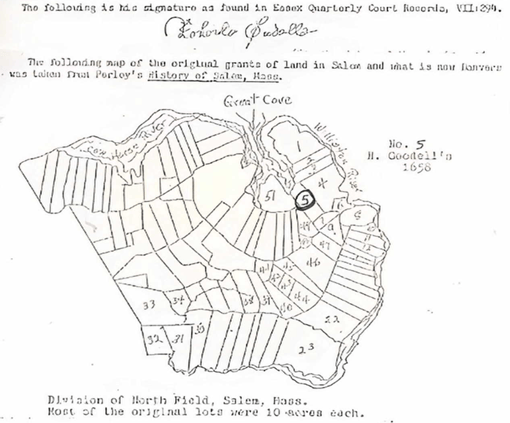
As his children married, he distributed portions of his land to them, helping establish a family settlement around his homestead. Robert died in Salem, Massachusetts, on October 12, 1682, bringing to a close a life that had spanned two continents and some of the most significant changes of the seventeenth century. He belonged to a generation that stood between two worlds—the England of his childhood and the emerging New England of his later years.
A Connection to the Salem Witch Trials
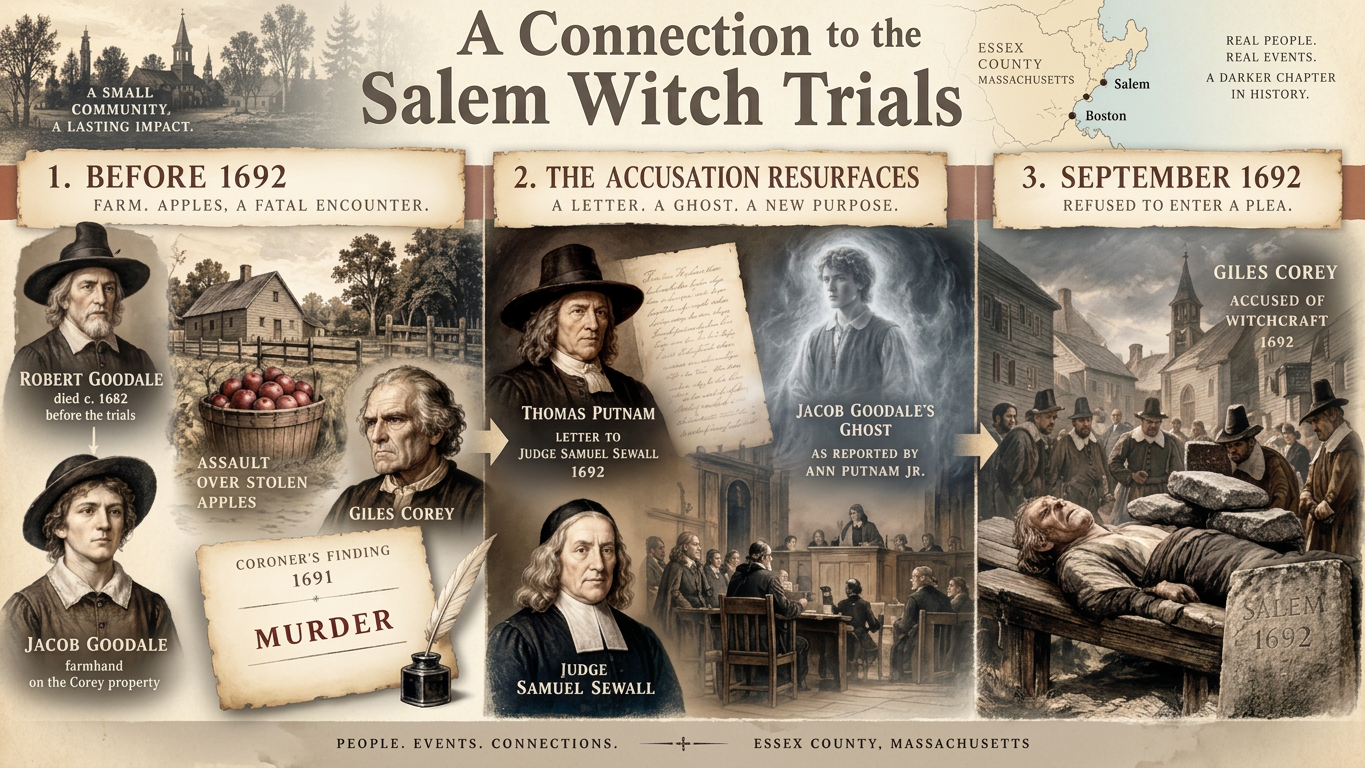
Robert Goodale’s connection to the Salem witch trials of 1692 came through his son, Jacob Goodale, and a tragic confrontation involving Giles Corey. Jacob worked as a farmhand on the Corey property in what is now Peabody, Massachusetts. According to historical accounts, Giles Corey accused Jacob of stealing apples and severely beat him with a stick described by a witness as being about an inch thick. The witness later testified that Corey struck Jacob approximately one hundred times. Jacob died from his injuries. A coroner’s jury determined that his death was the result of murder. Corey, however, was convicted only of using unreasonable force and was fined. The incident damaged Corey’s reputation within the community and would later become part of the story surrounding him during the Salem witch trials.
Nearly a decade later, in 1692, Giles Corey himself was accused of witchcraft. The earlier Goodale case resurfaced in a dramatic way. Thomas Putnam wrote to Judge Samuel Sewall, reminding him of Corey’s violent history and claiming that the ghost of Jacob Goodale had appeared to his daughter, Ann Putnam Jr., demanding vengeance. The story became part of the accusations and supernatural claims surrounding Corey during the witch trials. Corey refused to enter a plea when accused of witchcraft and was subjected to the brutal punishment known as pressing, in which heavy stones were placed upon his body in an attempt to force him to plead. He died under the weight of the stones in September 1692. Robert Goodale himself had died ten years before the Salem witch trials began. Yet the events involving his son Jacob and Giles Corey would ultimately place the Goodale family within the story of the 1692 witchcraft crisis.


Leave a comment